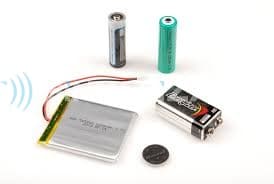
Looking at the Li-ion (lithium-ion), Li-Po (lithium-polymer) and LiFePO4 (lithium iron phosphate) battery types on the market for industrial and consumer projects, Li-ion and Li-Po batteries are in greater demand than the rest on grounds of cost. In projects that call for high power, LiFePO4 batteries are the more common choice. The battery type selected for the needs of the system must therefore be determined carefully at the design stage, and the calculations done thoroughly so that no harm comes to the surroundings in use or during charging.
Li-ion Batteries
Lithium-based batteries, sold under various names such as Lithium Ion, Li-ion and lithium-ion, have a nominal cell voltage of 3.6–3.7 V. Overcharging the battery above 4.2 V, or over-discharging it below 2.5 V, can cause losses in capacity and performance. When designing a charging circuit, the voltage at which the circuit cuts charging off must therefore be chosen well and the calculations made with care. The active operating voltage of Li-ion batteries lies between 2.5 V and 4.2 V; going outside that range can cost capacity and performance. Batteries of this type lose up to 20% of their capacity after roughly 1,000 charge–discharge cycles. Given that lead-based batteries have a charge cycle life of 500–800, that 20% loss over 1,000 cycles shows just how high the performance of these batteries is.
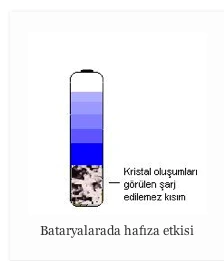
Li-ion batteries have no memory-effect* charging problem, so there is no need to discharge the battery fully before charging it. Although they lose performance from the moment of manufacture through factors such as incorrect use, incorrect charging, environmental conditions and ambient temperature, Li-ion batteries can be made to last considerably longer given suitable environmental conditions and correct use and charging methods.
* The memory effect, found mainly in Ni-Cd (nickel-cadmium) and to a lesser degree in Ni-MH (nickel-metal hydride) cells, means the battery has to be fully discharged before it can be charged. These batteries require a full discharge at regular intervals in order to hold their charge capacity. If charging them without a full discharge becomes habitual, crystal formation is observed inside the battery (the memory). The battery then loses performance over time and its service life is exhausted.