

Weigh-In-Motion System for Road Vehicles
TARTA weighs every vehicle at road speed, from 3 to 140 km/h. Two piezoelectric sensors and an inductive loop per lane feed a roadside processing unit, which matches each weight record to a plate read and a camera image and reports over the Web API or to ROTA.
What is weigh-in-motion?
Weigh-in-motion is the measurement of a vehicle's axle and total mass while it travels at normal road speed, without a weighbridge and without stopping. TARTA is Sinyalizasyon Elektronik's weigh-in-motion system, certified to OIML R134.
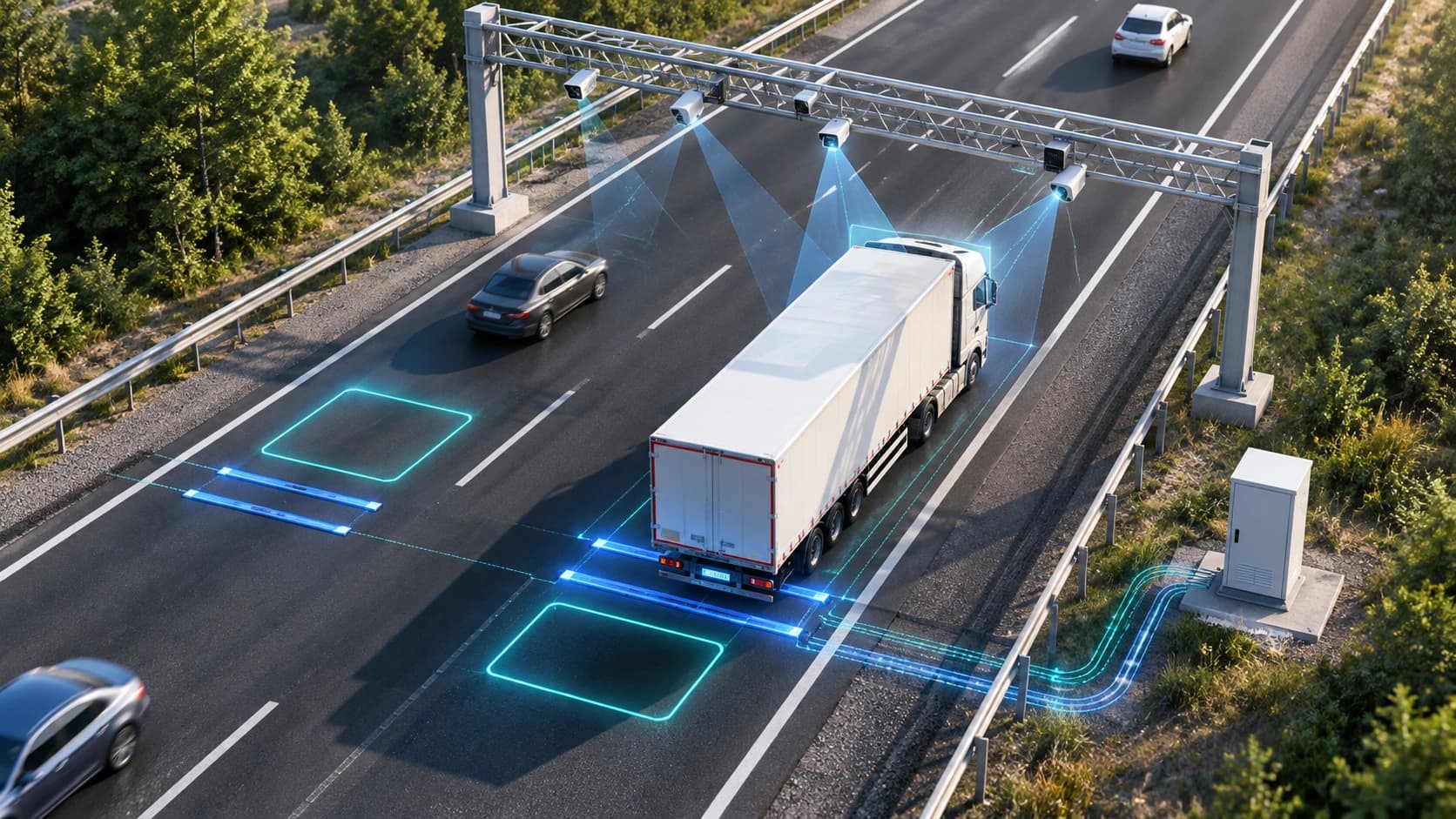
Each lane carries two piezoelectric sensors and one inductive loop; a road temperature sensor compensates the signal; an ANPR camera reads the plate and a monitoring camera records the passage; and a roadside data processing unit weighs, classifies, stores and transmits. Records reach the operator through a web interface, an SQL database and a Web API, or through the SİNYAL ROTA traffic centre.
- Weighing accuracy
- Certified to OIML R134
- Total mass error
- max. ±10%, ±5% option
- Speed range
- 3 – 140 km/h
- Mass per axle
- 0 – 25 tonnes
- Confidence level
- ≥ 90%
- Sensors per lane
- 2 piezoelectric + 1 inductive loop
How TARTA works
Piezoelectric sensors and an inductive loop in the road surface detect each axle and measure its mass. The processing unit computes total mass, speed, length and axle distances, classifies the vehicle, and stores the record with the plate read and the camera image.
What TARTA measures
- Mass per axle
- Total mass
- Axle distances
- Vehicle speed
- Vehicle length
- Vehicle counting
- Vehicle classification
- Multi-tyre detection
- Underinflated tyre detection
- ESAL road-wear calculation
- Automatic plate recognition
- Video record of each passage
Classification follows EN 8+1, EUR 13, COST 323 or a custom national scheme.
What the system is made of
One installation covers two or more lanes and is expandable per lane.
Piezoelectric sensors
2 per lane. Axle detection, mass per axle, total mass and axle distances. 1.75 or 2 m, 40 or 100 m cable, −40 to +80 °C.
Inductive loop
1 per lane. Vehicle presence, counting, speed and length. Loop cable up to 300 m.
Road temperature sensor
1 per site, under the road surface. Compensates the piezoelectric signal for road temperature.
Cameras
1 ANPR camera per lane, front or rear, multi-country plates. 1 monitoring camera per site for the passage image.
Data processing unit
1 per site. Modular 19-inch rack with WIM AD and loop detector cards. 2 SSD in RAID 1 plus 1 HDD for images.
Software
Web interface, SQL database and Web API. Records, statistics, export and administration, multi-language.
What a weighing record contains
- Timestamp
- Date and time of passage
- Lane
- Lane number
- Plate
- Read by the ANPR camera, matched to the weight record
- Mass per axle
- 0 – 25 t per axle
- Total mass
- max. ± 10% error
- Axle distances
- ± 10 cm, typically ± 5 cm
- Speed
- ± 5%, typically ± 3 km/h
- Length
- ± 50 cm
- Class
- EN 8+1, EUR 13, COST 323 or custom
- ESAL
- Road-wear equivalent
- Images
- Passage image and plate image
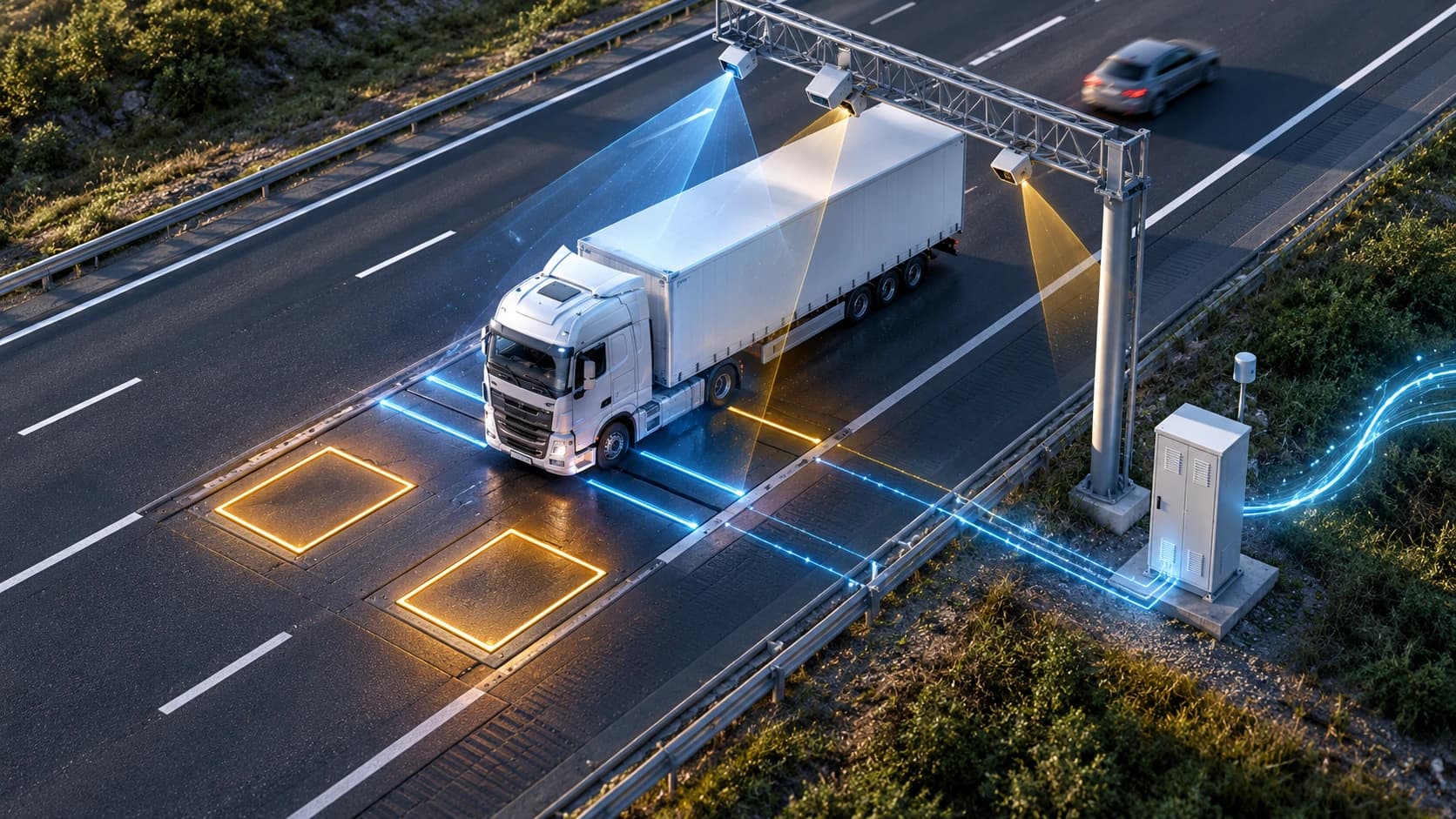
Every record is stored in the station database and served over the web interface, the SQL database and the Web API.
Accuracy and certification
TARTA is certified to OIML R134, the international recommendation for automatic instruments weighing road vehicles in motion.
- Total mass
- max. ± 10%; ± 5% with additional quartz or strain-gauge sensor rows
- Speed
- max. ± 5%, typically ± 3 km/h
- Vehicle length
- max. ± 50 cm
- Axle distance
- max. ± 10 cm, typically ± 5 cm
- Confidence level
- ≥ 90%
- Traffic volume
- 98%
- Classification
- 95% average, varies by category
- Weighing sensitivity
- From 0 kg — every vehicle is recorded
Where it is used
Road protection
Motorway and national road networks, bridges and city centres protected from overloaded vehicles.
Enforcement
Pre-selection and evidence for authorities: plate, images, certified mass and measurement protocol.
Tolling and planning
Weight-based toll systems, border crossings, traffic statistics and pavement maintenance planning.
Specifications
Measurement
- Mass per axle
- 0 – 25 tonnes
- Weighing sensitivity
- From 0 kg — every vehicle recorded
- Weighing speed range
- 3 – 140 km/h within the specified error margins
- Sensor configuration
- 2 piezoelectric sensors + 1 inductive loop per lane
- Classification schemes
- EN 8+1, EUR 13, COST 323, custom national categories
- Higher accuracy option
- ± 5% total mass with additional quartz or strain-gauge sensor rows
System
- Lanes monitored
- 2 or more per unit, expandable per lane
- Piezoelectric sensor
- 1.75 / 2 m length; 40 / 100 m cable; −40 °C to +80 °C
- Other sensors
- Inductive loop; road temperature sensor; quartz or strain gauge optional
- Processing unit
- Modular 19-inch rack; WIM AD and loop detector cards
- Max. cable length
- Loop 300 m; WIM sensor 100 m
- Data storage
- 2 × SSD in RAID 1 plus 1 × HDD for camera images
Interfaces and power
- Software
- Web interface, SQL database, Web API
- Central integration
- SİNYAL ROTA — live map, alarms, statistics, reports
- Communication
- 4G / 5G / LTE, Wi-Fi, TCP/IP Ethernet
- Monitoring
- Watchdog, remote diagnostics
- Supply voltage
- 85 – 264 V AC; UPS option
- Operating temperature
- −20 °C to +65 °C; Arctic, Tropic and Desert cabinet versions
Conformity
- Conformity
- CE marking on all components; certificate of conformity
- Warranty
- 5 years from delivery; post-warranty service and spare parts
Frequently asked questions about weigh-in-motion
What is weigh-in-motion?
The measurement of a vehicle's axle and total mass while it travels at normal road speed, without a weighbridge and without stopping. Sensors in the road surface detect each axle as it passes.
What does TARTA measure?
Mass per axle and total mass, speed, vehicle length, axle distances, vehicle count and class. It also reads the plate, records a passage image, calculates ESAL road wear and detects multi-tyre and underinflated tyre configurations.
How accurate is TARTA?
Total mass to a maximum error of ±10%, with a ±5% option using additional quartz or strain-gauge sensor rows. Speed is within ±5%, axle distance within ±10 cm and vehicle length within ±50 cm, at a confidence level of ≥90%.
Does the vehicle have to stop or slow down?
No. TARTA weighs at road speed, anywhere from 3 to 140 km/h within the specified error margins.
Is TARTA certified?
Yes. Weighing is certified to OIML R134, the international recommendation for automatic instruments weighing road vehicles in motion, and all components carry CE marking with a certificate of conformity.
How many lanes can one TARTA unit weigh?
Two or more per unit, expandable lane by lane. Each lane needs two piezoelectric sensors, one inductive loop and one ANPR camera.
What sensors does TARTA use?
Two piezoelectric sensors and one inductive loop per lane, plus a road temperature sensor per site that compensates the piezoelectric signal. Quartz or strain-gauge rows are available for higher accuracy.
Does TARTA read number plates?
Yes. An ANPR camera per lane reads the plate, front or rear, across multi-country formats, and the plate is matched to the weight record.
Can TARTA detect underinflated tyres?
Yes. Multi-tyre and underinflated tyre detection are part of the measurement, alongside the axle mass figures.
What is ESAL and does TARTA calculate it?
ESAL is the equivalent single axle load, the measure of how much road wear a vehicle causes. TARTA calculates it from the axle masses in each record.
How is the weight data accessed?
Through the TARTA web interface for records, statistics, export and administration, through the SQL database directly, or through the Web API.
Does TARTA work with SİNYAL ROTA?
Yes, natively. Live data, alarms and statistics reach the ROTA traffic centre over the Web API, on 4G, 5G or Ethernet.
Integration with ROTA
TARTA reports to the SİNYAL ROTA traffic centre over the Web API on 4G, 5G or Ethernet: live data, alarms and statistics appear on the live map alongside the signal data, with reports at network level. The same records are available locally through the TARTA web interface and directly from the SQL database.
Related solutions
Request a TARTA demo
Send the number of lanes, the road geometry and the speed range at the site.