
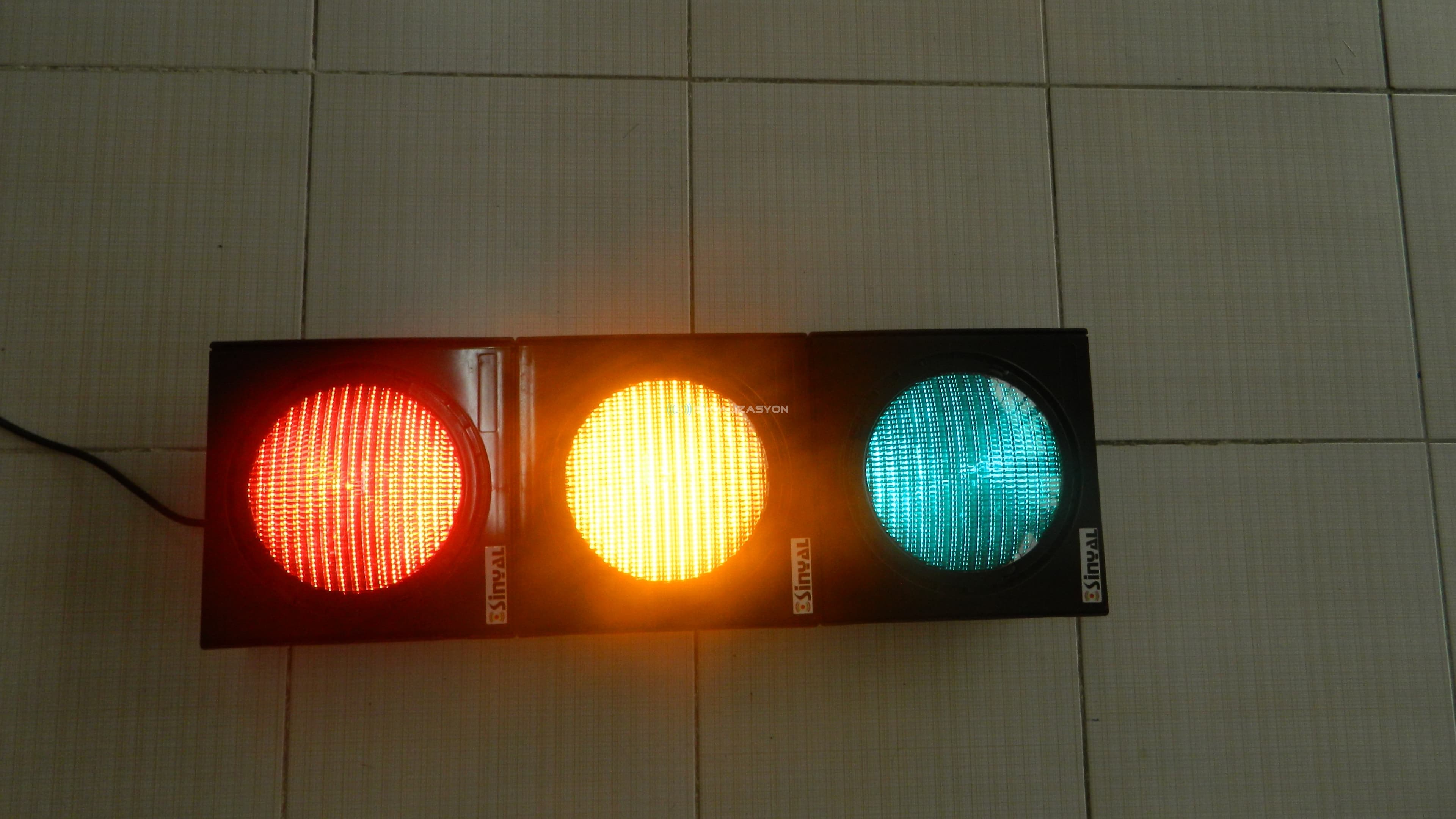
The main aim of a traffic signal is to deliver the light from its source to drivers and pedestrians as efficiently as possible, while reflecting stray light that falls on it, such as sunlight, outside the light distribution zone. Signal heads are designed with these effects in mind.
"Phantom signal" literally means a "ghost signal": a light signal that appears to be lit when it is not. When traffic lights operate in sunlight, the sun's rays create a misleading effect on the signal head. The less phantom signal a traffic light produces, the better it performs against this effect. The phantom class is measured by the Is/Iph ratio. Is is the luminous intensity emitted by the light source inside the signal head; Iph is the luminous intensity reflected back out when sunlight falls on it. The more the source light suppresses the reflected sunlight, the better the performance. If the Is/Iph ratio is above 16, the phantom class is 5, the best value. In Türkiye, the General Directorate of Highways (KGM) requires at least class 3 in its specifications.
Another way to reduce the phantom effect is to make the front lens of the signal head grey-transparent. Sunlight falling on grey glass cannot produce a coloured false signal, but grey lenses also absorb part of the source light and reduce its intensity (Is). Grey-transparent signal heads are therefore recommended in regions with very strong sunlight, and signal heads with coloured lenses in regions with less sunlight.