
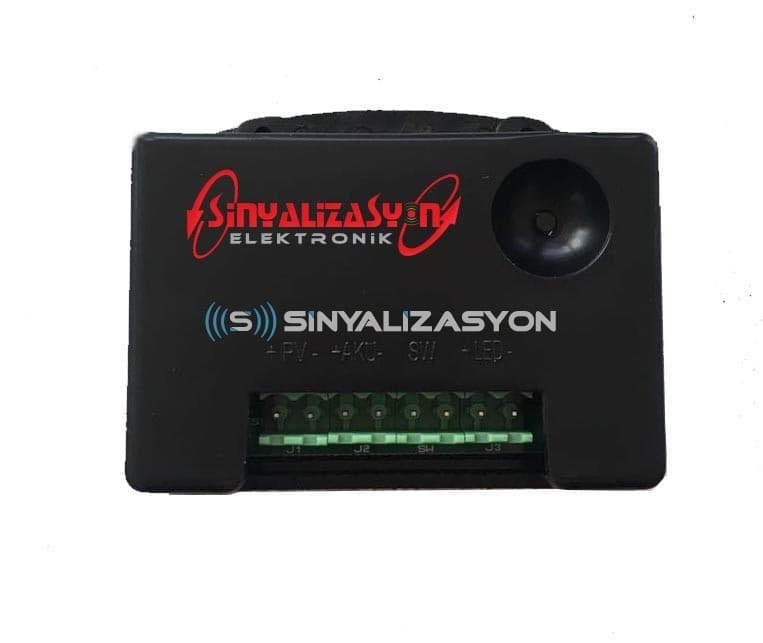
What is a solar charge regulator?
A charge control module, or charge regulator, is essentially a device that uses various algorithms to control voltage and current in order to stop batteries from overcharging. It handles the transfer of power from the solar panel to the battery, along with current and voltage control and conversion. Battery systems can be charged by connecting them straight to the panels — but that is not the right method for the health of your battery. Panels described as "12 V" have efficient voltage levels between 16 V and 20 V. Take a gel battery in standby use with a charging voltage of 14.4 V, and the panel's charging voltage is clearly a good deal higher. When a battery is exposed to high voltages its plates degrade quickly, raising its internal resistance — and as internal resistance rises, service life falls in the same proportion.
Charging the battery properly is therefore vital. Charging modules are needed in order to charge the battery to its factory figures, using technologies of varying efficiency such as PWM and MPPT.
Is a charge controller always needed?
Not always, but generally, charging panels at low powers such as 1 to 5 watts do not need a charge controller. As a rule of thumb, if the panel delivers around 2 watts or less for every 50 Ah of battery capacity, no regulator is required.
For a standard electric golf cart with a battery of around 210 Ah, for example, that rule allows a panel of up to roughly 8.4 watts without a regulator. On that basis, the 5 watt panels used for maintenance and storage need no regulator.
So why are panels 16–21 volts rather than 12?
Were it otherwise, panels would only deliver power in perfect conditions and full sun — which in most places is not something you can rely on. When the sun sits low in the sky, or under heavy haze, cloud cover or high temperatures, the panel has to supply extra voltage for us to get any output at all. A fully charged "12 V" battery sits at around 12.7 V at rest (roughly 13.6 to 14.4 V while charging), so the panel has to produce a voltage above that upper figure even in the worst conditions.
* Contrary to what is often assumed, solar panels perform better at lower temperatures. Roughly speaking, a panel rated 100 watts at room temperature becomes an 83 watt panel at 110 °F (about 43 °C).
The charge regulator conditions the panel's 16 to 20 V output to suit the battery, converting it to a voltage of roughly 10.5 to 14.6 V depending on the battery's state of charge, its type, the mode the controller is in, and temperature.
Types of charge regulator
The oldest systems in practical use are simple one- or two-stage arrangements that switch the solar panel off or on with a relay or MOSFET once a certain voltage is reached. Regulators of this architecture unfortunately still make up the majority in traffic signalling systems in Türkiye. They may look like a saving at the outset, but because they shorten battery life over the long run, their maintenance and upkeep costs are higher.
Charge regulators with maximum power point tracking (MPPT) extract up to 30% more energy from the panel than conventional PWM regulators. They also lose very little heat while charging, with a conversion performance of between 94% and 98%.
What is equalisation?
Equalisation, as the name suggests, is the process of bringing the voltage of every cell in the battery to exactly the same level. It is usually carried out by deliberately overcharging in the 15 V to 15.5 V range, so that the lower-voltage cells in the battery reach full capacity. Equalisation also performs another important function, particularly in flooded batteries left standing for long periods: it generates gas bubbles that stir the electrolyte. It should be remembered, though, that low power panels cannot supply enough current to produce that bubbling.
What is PWM?
PWM — Pulse Width Modulation — regulates the voltage applied to the battery input not by taking a fixed voltage output from the panel, but by switching the panel voltage on and off continuously over very short intervals. The control circuit in the charge regulator tracks panel voltage, battery voltage and the panel's short-circuit current, and from those determines the appropriate pulse width and frequency.
During PWM charging, the switching produces high frequency noise. A very well designed filter system is therefore essential. Used near systems sensitive to high frequencies, radio and television in particular, it will generate interference and spoil the experience.
Load output and low-voltage disconnect
Electrical devices connected to the output of a charge regulator are classed as the load. Were the connection made straight to the battery instead of to the load output, there would be no way to stop the battery falling below its critical minimum voltage and becoming useless — in overcast weather, after a fault that prevents charging, or when an excessive load is connected.
Because of these difficulties, the charge regulator carries an output terminal for low power loads. The charge control circuit monitors battery voltage and supplies output within the permitted range. Even at small power, using the LOAD output to run an inverter is not advised. Inverters can draw very brief high currents lasting as little as a millionth of a second, and those currents can do irreversible damage to the charging circuit. In such cases the inverter is connected directly to the panel while a relay is fitted to the load output, so that the inverter's DC input is switched by that relay. The inverter then runs only when the battery is in a fit state.
It is also possible to find charge regulators that an inverter can be connected to directly — though the cost should not be left out of the reckoning.