
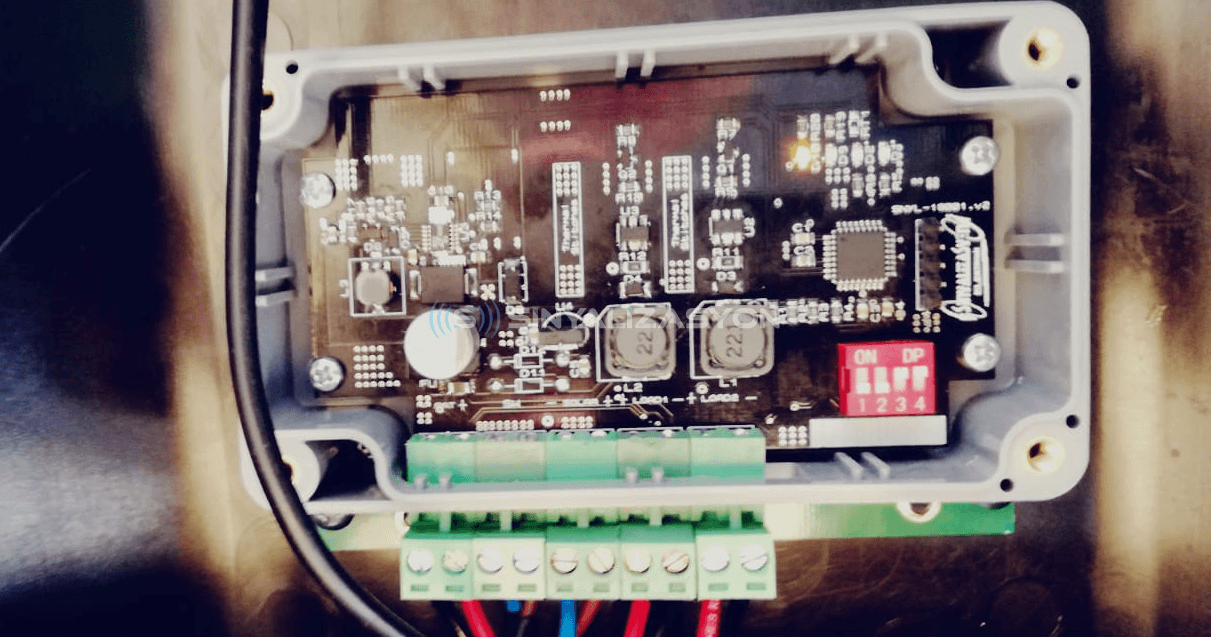
Industries have always been reluctant to give up established technologies developed over a long period and adapt to new ones. Traffic signalling is going through the same process today, in the move from lead-acid or gel batteries to lithium-based batteries. Lead-acid technology and its derivatives have been with us since 1859, for more than 150 years. But with their heavy weight, the hazardous acid they contain and their outdated efficiency, it is time to phase this technology out. We have already started: we are taking part in R&D on the use of lithium-ion batteries in two projects for a major customer, and we have begun adapting the designs we already use in our own products to our customers' needs and manufacturing them specifically for them.
Why move away from lead-based batteries?
1. Limited usable capacity
Using more than 30–50% of the nominal capacity of a typical lead-based deep-cycle battery is expected to shorten its life quickly. In practice, only 6–10 Ah of a 20 Ah battery can be used. Lithium-ion batteries can use their full capacity: their built-in control circuit prevents over-discharge, which protects the chemistry inside the battery.
2. Limited number of charge cycles
Solar flashers were under a serious threat of vandalism, especially when they were first installed. Today this has dropped considerably. The only way to get high performance from installed flashers is a long service life. Several things together make it easy to build products with a 5-year warranty: lithium-based batteries rated for 5,000 cycles instead of batteries that last 500–1,000 cycles when charged properly; a control circuit with trickle, constant-current and constant-voltage charging for deeply discharged batteries; a correctly designed LED panel driven with current control; and better build quality.
3. Slow and inefficient charging
A three-stage charge regulator can easily bring a lead-acid battery to 80% with constant-current bulk charging, but the remaining 20% is much harder: the last 20% takes 80% of the charging time. So in solar flasher systems, especially in harsh winters, lead-acid batteries cannot be charged to 100%. This may not cause a problem in practice, but a battery that is regularly not fully charged has a shorter life. Of course, as noted earlier, this applies when the battery is charged properly. Most flashers use simple switching circuits that ignore these charging techniques, which seriously shortens battery life.
Lead-acid batteries have another efficiency problem: storage. 15% of the energy sent to the battery during charging is consumed by chemical reactions, and the loss is greater when the battery charges at low current, for example at sunset.
4. Installation problems
A 300 mm housing can hold a battery of at most 24 Ah, and the battery must be kept upright inside it. In a closed space, a battery (especially one that is not charged properly) leaks gas that corrodes metal parts.